 7 min read
5 Bathroom Remodeling Mistakes That Can Decrease Your Home’s Value
Avoid These Value-Killing Mistakes
5 Costly Bathroom Remodeling Mistakes That Ruin Your Home Value
How Gulf Coast Humidity Changes the Remodel Game
Skimping on Ventilation in a Humid Climate
In the humid Golden Triangle climate, inadequate bathroom ventilation is one of the fastest ways to destroy your investment. Poor airflow traps moisture inside walls and ceilings, creating the perfect conditions for mold, mildew, and wood rot that can appear within months of completion.
Many homeowners assume a small window is enough, but Southeast Texas humidity demands a properly sized exhaust fan vented directly outside, not into the attic. Building codes require fans rated for your bathroom’s square footage, and skimping on this detail leads to peeling paint, warped cabinetry, and musty odors that send buyers running.
The real-world consequences in our area are severe and expensive. We’ve seen bathrooms less than two years old develop black mold colonies behind tile and inside wall cavities because the builder installed an undersized fan or vented it into the attic space. Once mold takes hold in our climate, remediation costs easily run several thousand dollars, and the disclosure requirement when you sell can slash your asking price or scare off buyers entirely. Insurance companies often deny claims for mold damage caused by inadequate ventilation, leaving you to cover the full repair bill.
Proper installation means more than just mounting a fan in the ceiling.
- The ductwork must be rigid or semi-rigid metal, not flexible plastic that sags and traps condensation.
- The vent must terminate outside through the roof or wall, with a proper cap to prevent backdrafts and pest entry.
- The fan should be positioned to pull moist air from the shower area, not just circulate it around the room.
- In larger bathrooms, you may need multiple exhaust points or a higher-capacity unit.
Beyond the fan itself, moisture-resistant materials make a significant difference in our wet climate. Mold-resistant drywall (often called green board or purple board) costs only slightly more than standard drywall but resists moisture penetration far better. Some homeowners in particularly humid areas or bathrooms without exterior walls benefit from adding a small dehumidifier on a timer or humidity sensor to supplement mechanical ventilation during peak moisture months.
The fix: work with a bathroom remodeler who calculates the correct CFM (cubic feet per minute) rating for your space and installs fans with humidity sensors that run automatically. In our area, adding a secondary dehumidification strategy or upgraded moisture-resistant drywall often makes sense. Tri-Tex Builders factors climate-specific ventilation into every bathroom design because we know what happens when contractors skip this step in our wet, warm conditions.
Chasing Trends Over Timeless Design
Trend-driven fixtures and finishes might grab attention on social media today, but they age poorly and narrow your buyer pool when it’s time to sell. Ultra-modern geometric tile, statement colors, or novelty fixtures quickly look dated, and replacing them becomes the next owner’s expensive problem.
In the Beaumont-Port Arthur market, we’ve watched certain trendy choices lose their appeal within just a few years. Barn door-style shower enclosures, rose gold fixtures, and bold geometric cement tile were everywhere three years ago, but today’s buyers already see them as dated. Bright accent walls in teal or coral that felt fresh in design magazines now require expensive re-tiling to appeal to the traditional tastes that dominate our local resale market. Black hexagon floor tile, floating vanities with open shelving, and Edison bulb fixtures are already showing the same trajectory.
Appraisers and real estate agents consistently report that neutral, classic bathrooms command higher resale values because they appeal to the widest range of buyers. When you choose materials purely for their Instagram moment rather than lasting quality and broad appeal, you’re essentially planning your own remodel obsolescence. Buyers in Southeast Texas tend to favor traditional, clean designs over bold statements, and they’re willing to pay more for bathrooms that won’t require immediate updates.
Timeless means proven longevity and broad appeal.
- White or light-gray subway tile has remained desirable for decades and works in both traditional and contemporary homes.
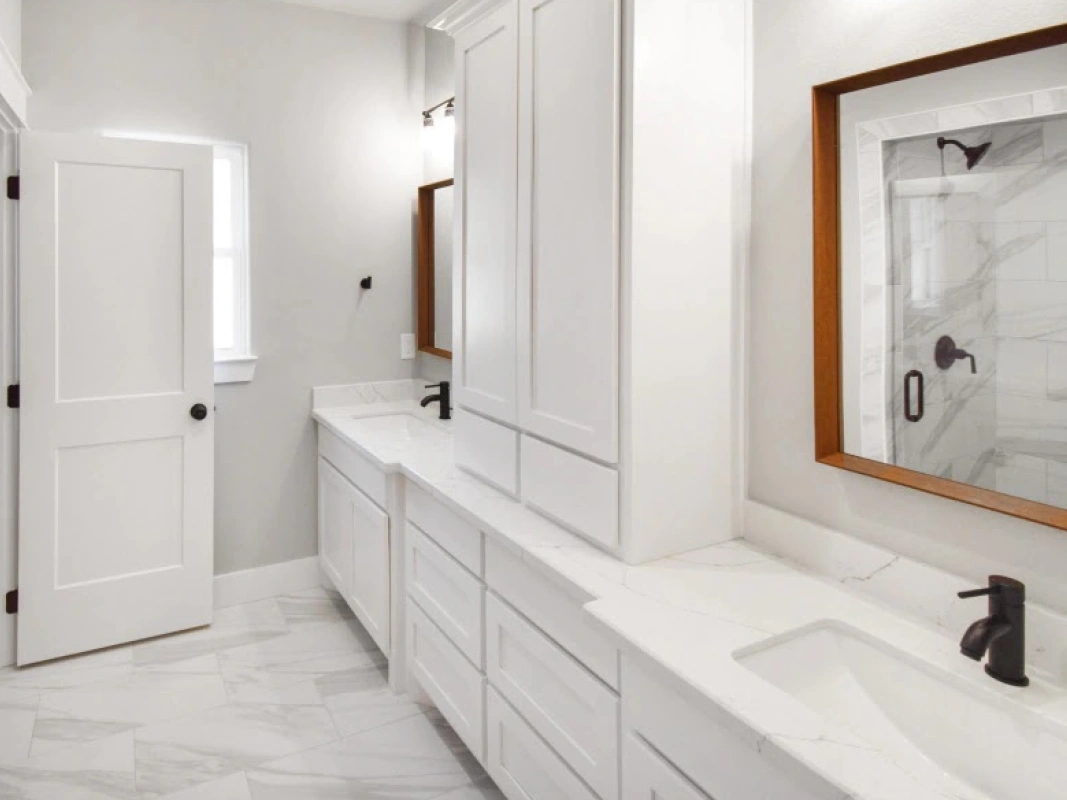
- Carrara or similar marble-look materials in neutral tones never go out of style.
- Brushed nickel and chrome have staying power, while oil-rubbed bronze and matte black finishes have proven their durability beyond trend status.
- Large-format neutral porcelain tile (12×24 or larger) in whites, grays, or beiges offers a clean, current look without the risk of appearing dated in five years.
The fix: invest in timeless materials like subway tile, neutral stone, and quality fixtures in brushed nickel or matte black finishes that have staying power. Save your personality for easily swapped items like mirrors, lighting, and hardware. A skilled bathroom remodeler will guide you toward choices that balance current style with enduring appeal. Tri-Tex helps clients select finishes that look fresh now and will still attract buyers a decade from now, protecting the value you’re building into your home.
Cutting Corners on Waterproofing
Proper waterproofing is invisible once your bathroom is finished, which is exactly why so many contractors cut corners here. But skimping on waterproof membranes, pan liners, and moisture barriers in wet zones (showers, tub surrounds, and floors) creates ticking time bombs that destroy subfloors, studs, and adjacent rooms.
In our humid region, water intrusion compounds quickly. A shower pan installed without the correct slope or membrane allows water to seep into framing, where it rots joists and feeds mold colonies that spread throughout your home. These problems often stay hidden until a home inspection, at which point they torpedo sales and force expensive emergency repairs.
During construction, homeowners should watch for specific warning signs that waterproofing is being skipped or poorly executed.
- If you see tile going directly onto drywall in a shower, that’s a red flag. Standard drywall, even green board, is not an acceptable backer in wet zones.
- If the contractor is rushing through the shower pan or skipping the flood test (filling the pan base to check for leaks before installing tile), that’s another warning sign.
- Any penetrations through waterproof membranes for valve bodies, drains, or niches must be sealed with compatible materials, not just caulked over.
Code-compliant waterproofing in humid climates requires multiple layers of protection. The substrate must be appropriate: cement backer board, waterproof foam board, or liquid-applied membranes over suitable bases. Brands like Schluter, Wedi, and RedGard are industry standards. Shower pan construction requires a sloped mortar bed (or pre-sloped foam pan) over a proper PVC or CPE liner, with the liner extending at least six inches up every wall. All seams, corners, and penetrations must be reinforced and sealed. The waterproof membrane or backer must extend from floor to ceiling in shower areas and at least 72 inches high around tubs.
Inspectors check for these layers during rough-in inspections, which is another reason why permits matter. A proper installation includes inspection checkpoints: after framing, after waterproofing but before tile, and at final. Each stage verifies that water barriers are intact and correctly detailed.
The fix: insist on redundant waterproofing layers in every wet zone. That means proper substrate prep, code-compliant membranes or waterproof backer board, correct mortar bed slopes, and sealed penetrations. This isn’t an area to DIY or hire the lowest bidder. Tri-Tex Builders treats waterproofing as non-negotiable because we’ve seen the catastrophic damage that results when it’s done wrong, and we build every bathroom to last in Southeast Texas conditions.
Ignoring Layout and Flow
Aesthetics grab attention, but layout dictates whether your bathroom actually works. Doors that swing into traffic paths, toilets placed too close to vanities, inadequate clearances around fixtures, and poorly planned lighting all scream amateur work and frustrate daily use.
Building codes specify minimum clearances for a reason: a toilet needs at least 15 inches from its centerline to any wall or fixture, and you need 21 inches of clear space in front. Showers require minimum dimensions for comfort and resale appeal. Ignoring these standards creates cramped, awkward spaces that appraisers note and buyers discount.
Common layout mistakes create daily frustration and signal poor planning to buyers.
- A bathroom door that swings inward and hits the toilet or vanity means someone has to squeeze past the door every time they enter.
- A mirror positioned where overhead lighting casts shadows on faces makes grooming difficult.
- A single overhead light fixture in the center of the room leaves corners dark and creates harsh shadows at the vanity.
- A toilet placed so close to the shower that the door can’t fully open, or a vanity with zero counter space beside the sink for everyday items like toothbrushes and soap, all reduce functionality and perceived value.
Storage planning is another area where poor layout kills both function and resale appeal. A beautiful bathroom with nowhere to store towels, toiletries, or cleaning supplies frustrates daily use. Medicine cabinets placed where the door hits the light fixture or too high for shorter family members to reach safely are common errors. Drawer and cabinet door swings that conflict with each other or with the toilet location show lack of planning.
Electrical outlet placement matters more than most homeowners realize. Code requires GFCI outlets within three feet of the sink, but poorly planned outlet locations—hidden behind doors, too far from grooming areas, or positioned where they interrupt tile patterns—reduce both safety and convenience. Task lighting zones at the vanity need dedicated electrical rough-in, ideally with separate switching from ambient lighting. Nightlight placement, exhaust fan switching location, and heated floor thermostats all need to be planned during layout, not added as afterthoughts.
The fix: plan your layout before you fall in love with tile samples. Consider how doors open, where towel bars land, whether two people can use the space simultaneously, and how lighting falls across mirrors and work zones. An experienced contractor maps these details during design, not after demolition. Tri-Tex starts every bathroom project with a functional layout plan that meets code, maximizes your square footage, and creates a space that feels intuitive to use because we know poor planning tanks both daily enjoyment and resale value.
DIY Electrical and Unpermitted Work
Bathrooms are wet, high-traffic spaces with strict electrical and plumbing codes for good reason: mistakes can injure occupants, cause fires, or flood your home. Yet DIY electrical work and unlicensed plumbing remain among the most common bathroom remodel shortcuts, and they create liabilities that surface during home inspections and kill sales.
Electrical codes require GFCI outlets, proper load calculations, weatherproof boxes in wet zones, and inspections at rough-in and final stages. Plumbing work demands correct venting, trap distances, water pressure balancing, and anti-scald protection. Skipping permits or hiring uninsured handymen to save a few hundred dollars exposes you to thousands in repair costs, failed inspections, and potential insurance claim denials if something goes wrong.
Real scenarios in Southeast Texas illustrate the cost of cutting corners.
- A homeowner in Orange saved money by having a handyman replumb their bathroom without permits, only to discover during the sale that the buyer’s inspector flagged illegal venting and cross-connected hot and cold lines. The repair required opening walls, correcting the plumbing, and getting retroactive permits and inspections, delaying closing by three weeks and costing over four thousand dollars.
- Another Beaumont homeowner’s insurance claim for water damage from a failed shower valve was denied because the valve had been installed by an unlicensed plumber with no permit on record, leaving the homeowner to cover twelve thousand dollars in repairs to the bathroom and the bedroom below.
Unpermitted electrical work poses even greater risks. Improperly wired GFCI outlets, overloaded circuits, and non-code-compliant installations in wet areas create shock and fire hazards. Home inspectors routinely check for permits on bathroom remodels, and the absence of permits raises red flags that can tank a sale or force significant price reductions. Buyers know that unpermitted work may hide other problems, and lenders often refuse to finance homes with unpermitted additions or remodels until the work is brought up to code and properly inspected.
The permitting and inspection process protects your investment and isn’t as burdensome as many homeowners fear. After your contractor pulls permits, an inspector visits at the rough-in stage to verify framing, plumbing, and electrical work before walls close up. This catches errors when they’re still easy and inexpensive to fix. The final inspection confirms that all finish work meets code and that the bathroom is safe to use. Working with licensed contractors who know local code requirements and have relationships with inspectors streamlines the process. Most inspections take less than 30 minutes, and scheduling is straightforward when the work is done right the first time.
The fix: hire licensed, insured trades for all electrical and plumbing work, and pull the required permits. Yes, it costs more upfront, but it protects your investment and proves to future buyers that the work was done right. Tri-Tex coordinates licensed electricians and plumbers on every bathroom remodel, manages all permitting, and ensures inspections pass the first time because we know unpermitted or amateur work is a deal-breaker when you sell.
